
Metal on Metal Hip Side Effects The Cobalt Warning That Reached the Spine
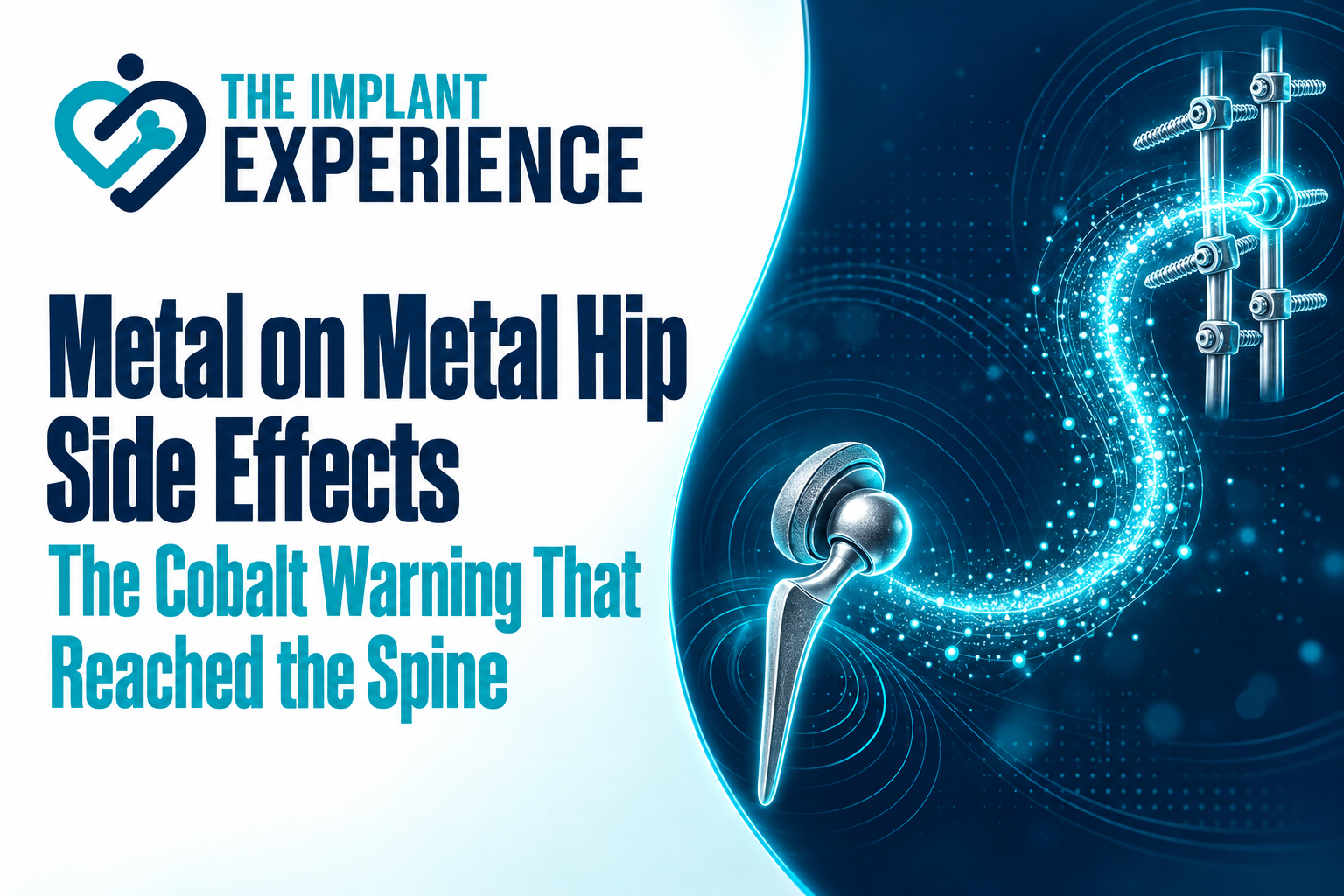
What if a problem associated with hip implants did not stop at the hip?
Metal-on-metal hip side effects raise important questions about how implant materials wear, what researchers have documented, and how patients can learn what is inside their bodies. The evidence deserves attention, but also careful context. Most implants serve patients well, and the research described here does not measure any individual’s personal risk.
When Metal Surfaces Rub
In a metal-on-metal hip implant, two metal surfaces move against each other. The FDA’s guidance on metal-on-metal hip implants explains that this friction can release cobalt and chromium ions. These ions can enter the bloodstream and travel beyond the implant site.
The clinical term for cobalt-related effects from an orthopedic implant is orthopaedic implant cobaltism. Research published in Neuroscience in 2025 examines how cobalt from cobalt-chromium orthopedic implants can affect the brain.
A 2025 systematic review examined 15 studies and reported an association between cobalt exposure and problems with memory and thinking in all 15. The review’s findings came from case reports. They are not a measure of how often these problems occur among all people with implants.
The review also reported that more than 85 percent of reported outcomes showed partial or complete resolution after the device was revised. That describes the outcomes in the reviewed reports. It is not a prediction for any one person.
A Reported Case Involving Spinal Hardware
In February 2025, a case report in BMJ Case Reports described orthopaedic implant cobaltism associated with spinal hardware. The report described cobalt-chromium components that corroded where rods met screws and eventually broke. Symptoms reported in the case included tremors, changes in memory and thinking, insomnia, and changes in vision.
This was a rare report involving specific circumstances: cobalt-chromium components, corrosion or failure at a junction, and a long time in the body. Most modern lumbar fusions use titanium, and most patients with hip or spinal implants are fine.
A case report can add to medical understanding and prompt further investigation. It cannot establish how common a condition is, or determine what is happening in any particular patient.
The Patient Information Gap
Research and device records matter only if patients and care teams can access information about the implants involved. Yet a patient may not have the device name, model, materials, or Unique Device Identifier readily available.
Keeping those details somewhere accessible can help patients and their care teams check relevant records and discuss questions with better information. This is not about assigning blame to an individual clinician. If a care team does not have an answer immediately, the next step can be to look for it together.
What You Can Actually Do
None of this is a reason to panic about a hip or spinal implant you already have. It is a reason to know, in plain terms, what is inside your own body. The recommended steps are simple and apply to anyone with an implant, not only those with a metal hip or spinal hardware:
Ask your care team for the name, model, and Unique Device Identifier of every implant you carry, and ask whether anything on the public record touches it.
If your implant is a metal hip or spinal hardware, ask specifically: what is it made of, does it contain cobalt-chromium, and does checking your metal levels make sense for you. That is not a decision about removing anything. It is a fact about your own body that you do not currently have.
If you have had persistent, unexplained symptoms years after an implant, especially if there is any reason to think the hardware has loosened, raise metal wear with your own care team.
“Not medical advice · Questions about your own device go to your care team."
Knowing What You Carry
The record on metal-on-metal hip side effects is not a reason to assume an implant is unsafe. It is a reason to make sure patients can find reliable information about their own devices and discuss relevant questions with their care teams.
The path to patient safety runs through all of us.
You own what’s inside your body. So track it. And stay informed.
For the full discussion, listen to “Metal on the Move,” an episode of The Implant Experience.